Plant-care system
How can watering, lighting and interaction form an expandable plant-care prototype?
- Current output
- A frame, enclosure, watering mechanism and custom mounts, with a lower electronics compartment and XT30 external connections, followed by assembly and integration.
- My role
- Mechanical lead responsible for independent mechanical and enclosure design and custom parts, with assembly and integration carried out with the team.
Bring plants, water and electronics together
Planters, an aquarium, lights, water tubes, a display and a camera share one structure. I arranged their positions before designing the aluminium frame, acrylic enclosure and custom mounts.
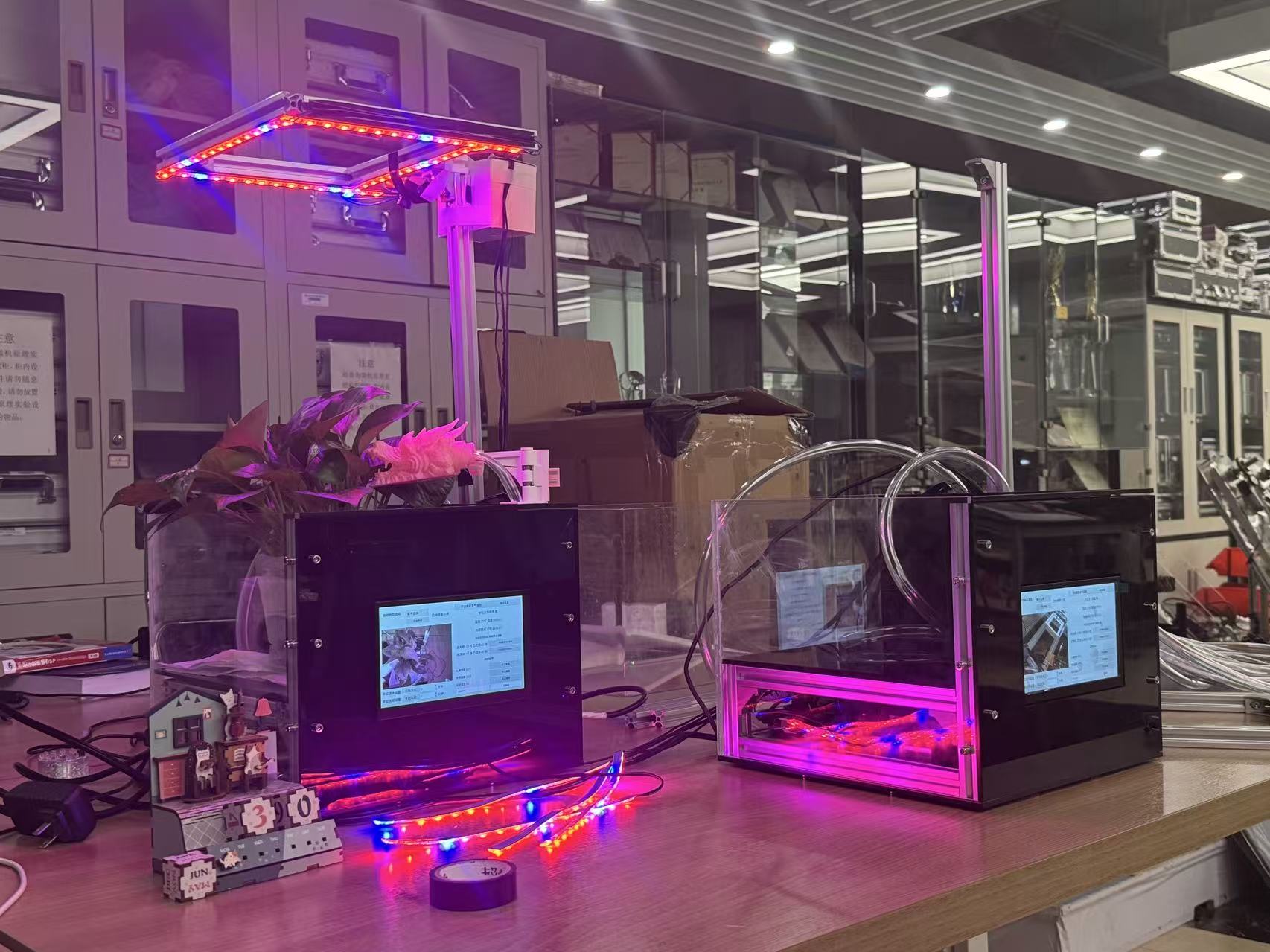
My mechanical design and fabrication
As mechanical lead, I designed the structure and enclosure, including the adjustable light support, display panel, removable power mounting, planter casing and pump/tube interfaces. I 3D-printed custom mounts for the physical assembly.
Make the watering direction adjustable
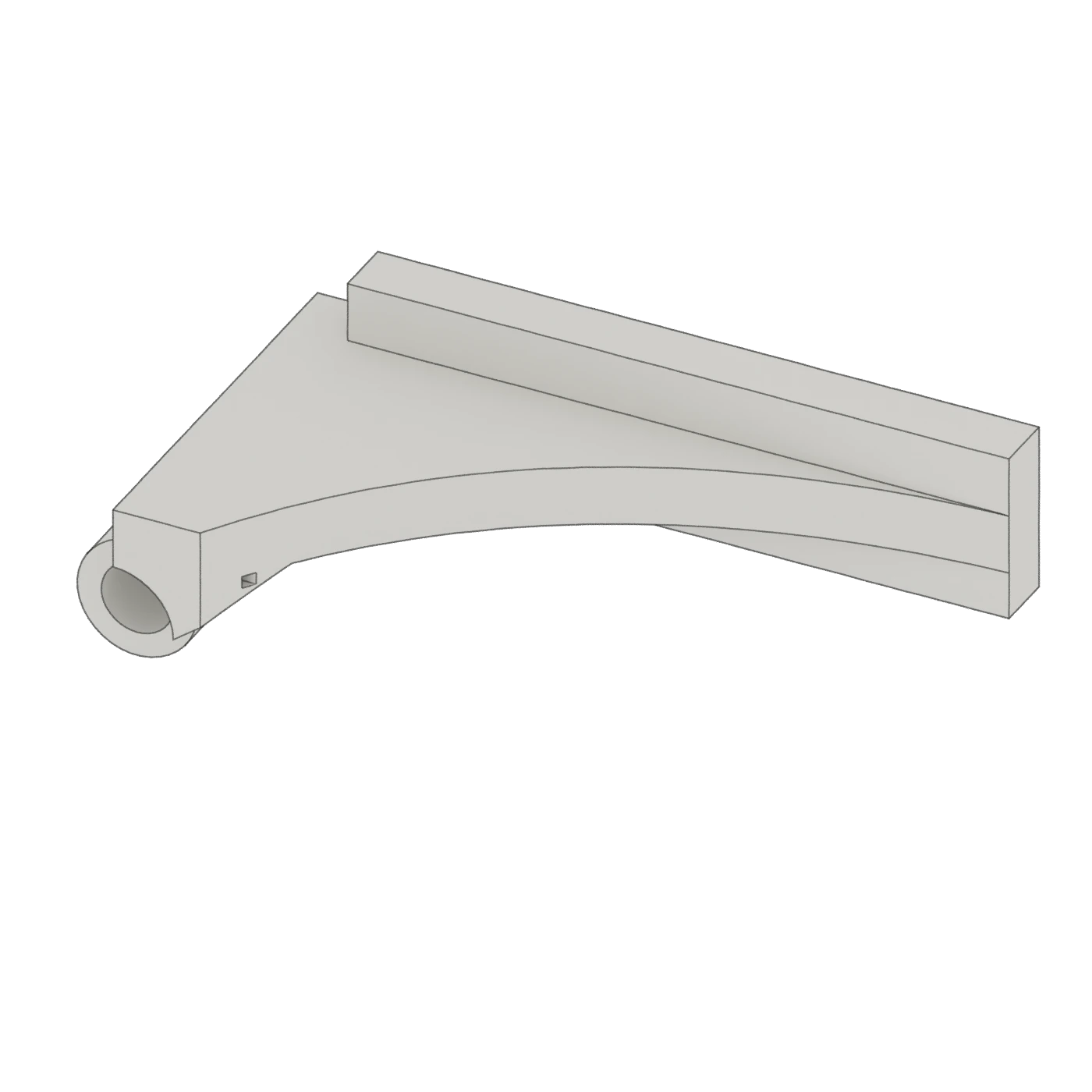
I used two rotatable rings to adjust a watering spout, combined with my own modelled and 3D-printed structure to cover a region of roughly 60°. Moving parts, a base and connectors secure the tube while leaving room for the motion.
Give the electronics their own lower compartment
Because the aquarium and planter can connect, the water path and electronics need to be considered together. I isolated the planter electronics in a separate lower compartment, separating them from the planting area and water above.
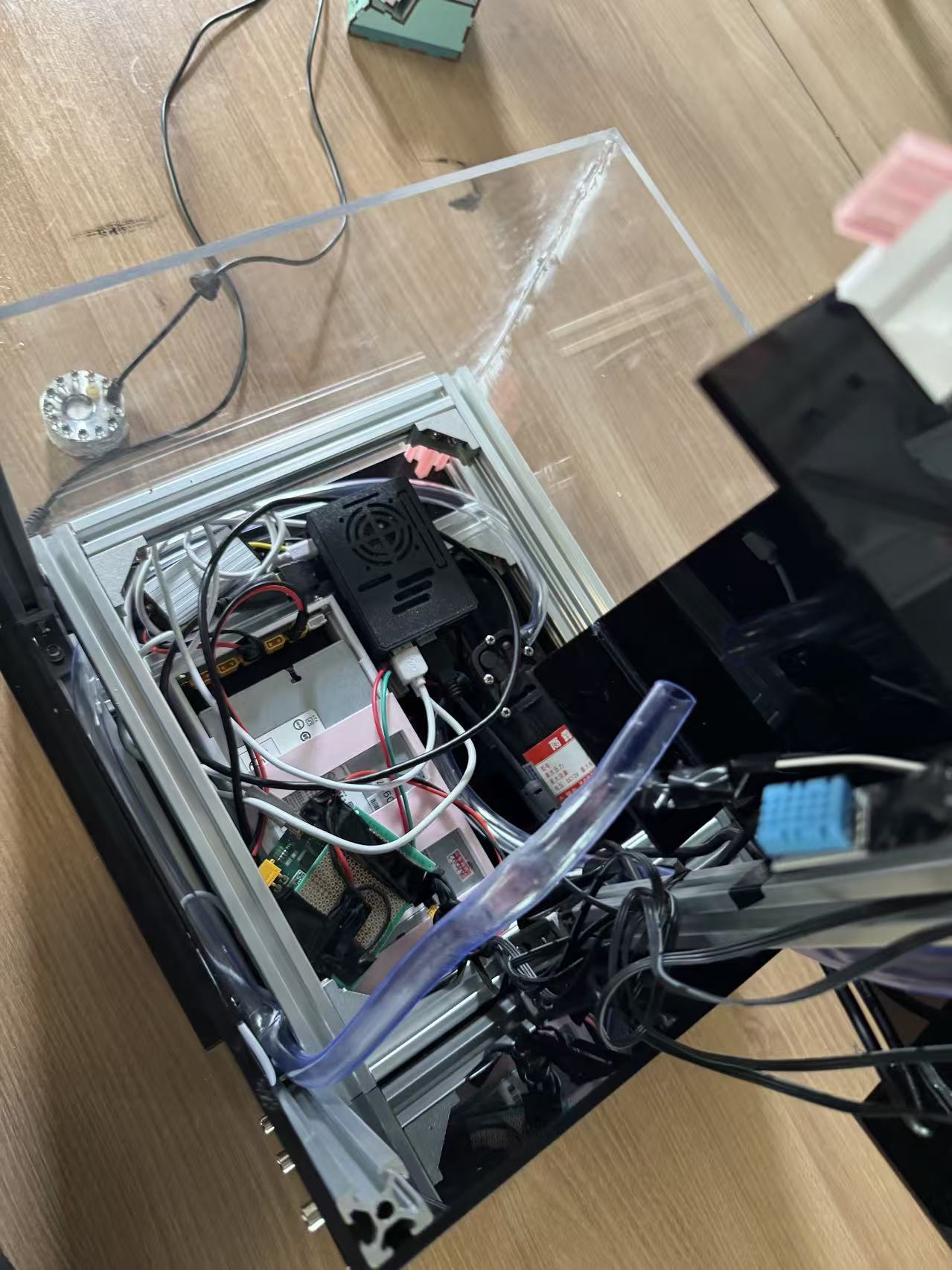
Connect modules through XT30 interfaces
I designed XT30 external connections so multiple planter modules can connect in parallel. The interface defines the connection between modules and makes expansion possible without reopening the internal wiring each time.
Connect the functions during assembly
After making the structure and printed parts, I helped install the display, camera, sensors, pump and controllers, and worked with the team to integrate watering, zoned lighting and interaction.